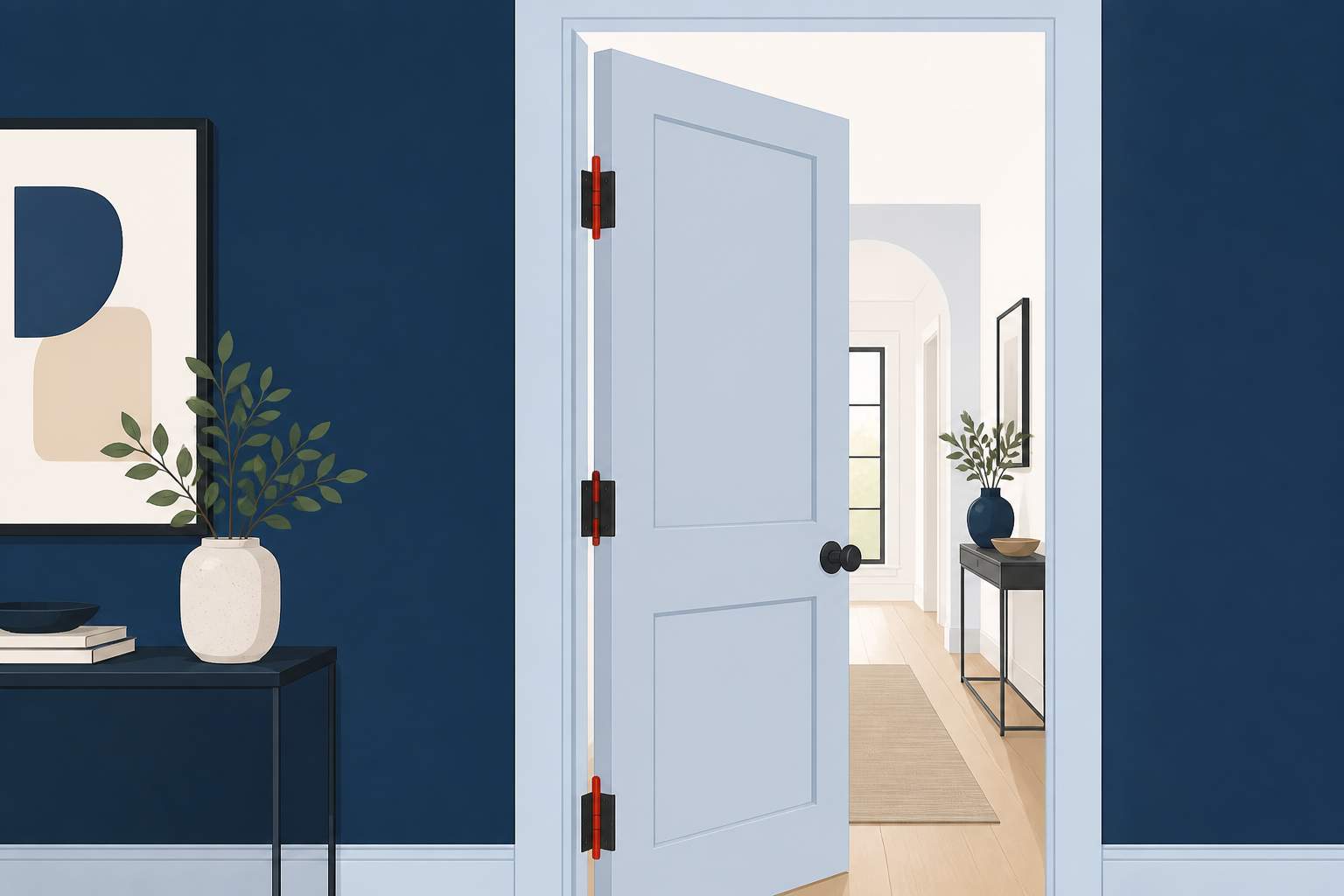
If your interior door is sticking or squeaking, it’s often because of the hinges. In humid areas like Florida, wood can swell, which may cause the hinges to become loose or misaligned. Thankfully, fixing this is straightforward and can be done with just a screwdriver and a few minutes.
Start out by finding the screws located on both the door frame and the door itself. Interior doors typically have three screws per hinge, though some might use two. Use a Phillips or flat-head screwdriver to tighten each screw by turning it clockwise until it is snug. Be careful not to over-tighten, as this could strip the screw head or damage the wood. If you encounter a stripped screw, replace it with one of the same size. Adding a lock washer or a small piece of wood between the screw head and the hinge can prevent the screw from loosening over time.
Next, check whether the hinges are aligned properly. The door may not swing evenly, or the frame may look warped. In this case, you might need to adjust the hinge plates. Loosen the screws slightly, reposition the hinge plate so the door is flush with the frame, and retighten the screws. If the door still fails to close properly, try moving the hinge plates up or down by a quarter inch. Such slight adjustments can significantly improve how the door closes and reduce air leaks.
If the hinges are damaged or the door itself is warped, you may need to replace them. Many homeowners in Florida have American doors that come equipped with standard hinges. It's a relatively quick job to swap a hinge: unscrew the old one, slide it off the door and frame, and install the new one in the same orientation. It's best to use the same size and length screws as before, but consider using new screws if the old ones appear worn. After reinstalling the new hinge, tighten the screws and test the door's function. If it still sticks, you might need to adjust the door’s trim or casing. Door molding repair can help if the trim is warped.
If the door has a storm door or a replacement screen window, special attention may be needed for the hinges. Storm doors typically have heftier hinges that can become loose over time. Tightening them and adding a lock washer can stabilize the storm door. A no-install screen door usually comes with pre-assembled hinges that need little more than tightening. Adjusting the hinges whenever you replace a sliding door with a window can also help enhance its fit and minimize drafts. In all cases, the goal is to keep the door and hardware aligned.
When you detect a draft around a door, hinge adjustment is part of a drafty door fix. After tightening and aligning the hinges, check the gap between the door and the frame. If the gap remains large, you can try weatherstripping on either the door jamb or the door itself. Weatherstripping is affordable and can be installed easily with an adhesive strip or rubber gasket. This step is especially beneficial in Florida, where heat and humidity can amplify draftiness.
If you have a door with a pull or knob that is hard to turn, hinge adjustment can help too. A misaligned hinge might cause the knob to bind. Tightening the hinge screws and confirming the door sits flush with the frame will help the knob or pull operate smoothly. However, if the knob itself is worn, you might want to replace it with an American door handle or a new door pull that complements your home’s style.
Most of the time, adjusting the hinges is all that's needed.
.svg)
.svg)

.svg)
