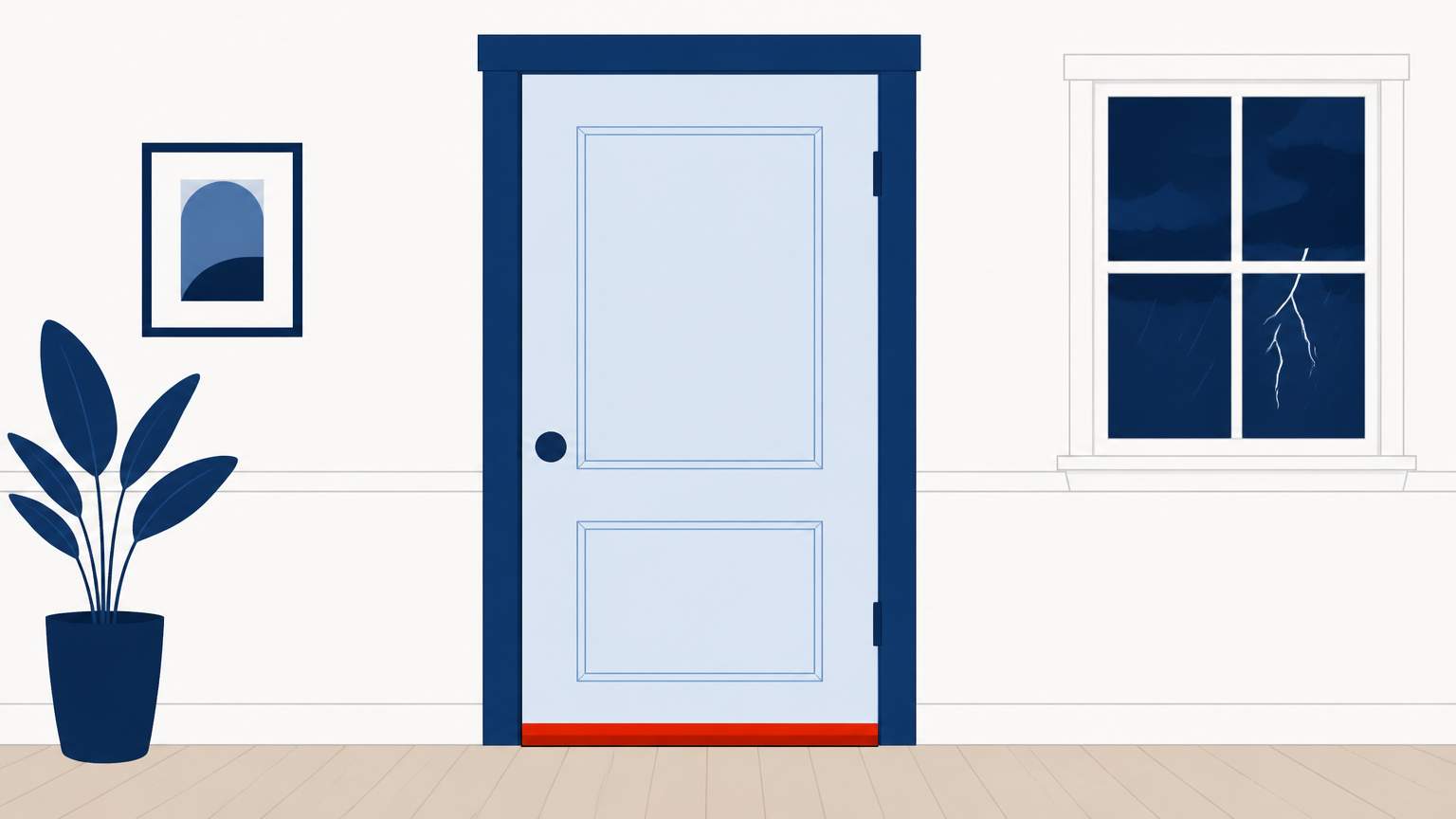
Homeowners in Florida typically focus on their windows when a hurricane watch is issued. However, they shouldn’t overlook their interior doors, which can be vulnerable to wind-driven rain and pressure loss. Installing a simple weather-stripping door sweep can seal the space at the bottom of the door, preventing water intrusion and helping to maintain indoor pressure. This sweep is easy to install, affordable, and suitable for most DIYers or handymen without the need for a licensed contractor.
When the door closes, the sweep presses against the floor or a custom-cut board, effectively blocking out air and water. Since the sweep remains attached to the door frame, it won’t be blown off during strong winds. Installing it before a storm can provide reassurance to homeowners and may even fulfill Florida insurance requirements for “code-compliant” storm sealing.
A standard kit contains a door sweep, screws rated for outdoor use, a drill with a 1/4-inch bit, measuring tape, a pencil, and safety gloves. It's essential for the sweep to be made from a flexible and durable material like rubber or vinyl. If the floor is uneven, cutting a piece of 5/8-inch exterior-grade plywood to fit the gap will provide a stable base for the sweep. The piece of plywood can also serve as a temporary storm door.
To install, measure the door’s bottom edge from the floor to the threshold, cut the sweep to that length, mark the screw holes, drill pilot holes, and attach the sweep to the door frame. Ensure that screws are flush with the sweep’s surface to prevent them from catching wind. After closing the door, check that the sweep is snug against the floor or plywood. If a small gap is present, applying a strip of weather-resistant tape can seal it.
Ensure the door’s bottom edge is clean, with no paint or detritus that could hinder the sweep’s contact with the door frame. Tighten squeaky door hinges and replace worn screws if the door has any loose parts. A stable frame helps the sweep maintain its position and prevents it from shifting under wind pressure.
When attaching the sweep, choose screws that reach the door frame but don’t penetrate the wood. Over-drilling may weaken the frame, creating a new gap. If the threshold is uneven, securely affix a small piece of plywood to the floor to level the surface. The sweep should sit flush against the plywood, forming a continuous barrier.
Test the seal by pressing gently on the sweep when the door closes. It should hold firm and not allow air to pass. If the sweep is loose, consider adding a second screw or a small piece of rubber gasket between the sweep and the floor for a tighter seal.
Door sweeps can last several years as long as they are clean and free of debris. However, if one becomes cracked or warped or if the door's bottom edge gets damaged, it should be replaced. Homeowners who frequently experience storms may want to invest in better options, such as a replacement door installation with an integrated storm-seal or a pet door for storm door installation with a weather-stripping system. These alternatives offer superior durability and potential insurance discounts under Florida Building Code.
Unsure if your door meets state wind-load requirements? A licensed contractor can evaluate your door with a wind-mitigation inspection. A favorable report can be used to lower insurance premiums. Though DIY sweeps are a quick fix, consider professional installation of storm-rated doors or impact-resistant windows for long-term safety and to avoid potential insurance claim denials after a hurricane.
Installing a weather-stripping door sweep before a hurricane is a smart move for Florida homeowners. It can lower the chance of water damage and keep indoor pressure stable, thus enhancing home safety during severe weather. This straightforward project costs little and can be completed within an hour using basic tools.
.svg)
.svg)

.svg)
