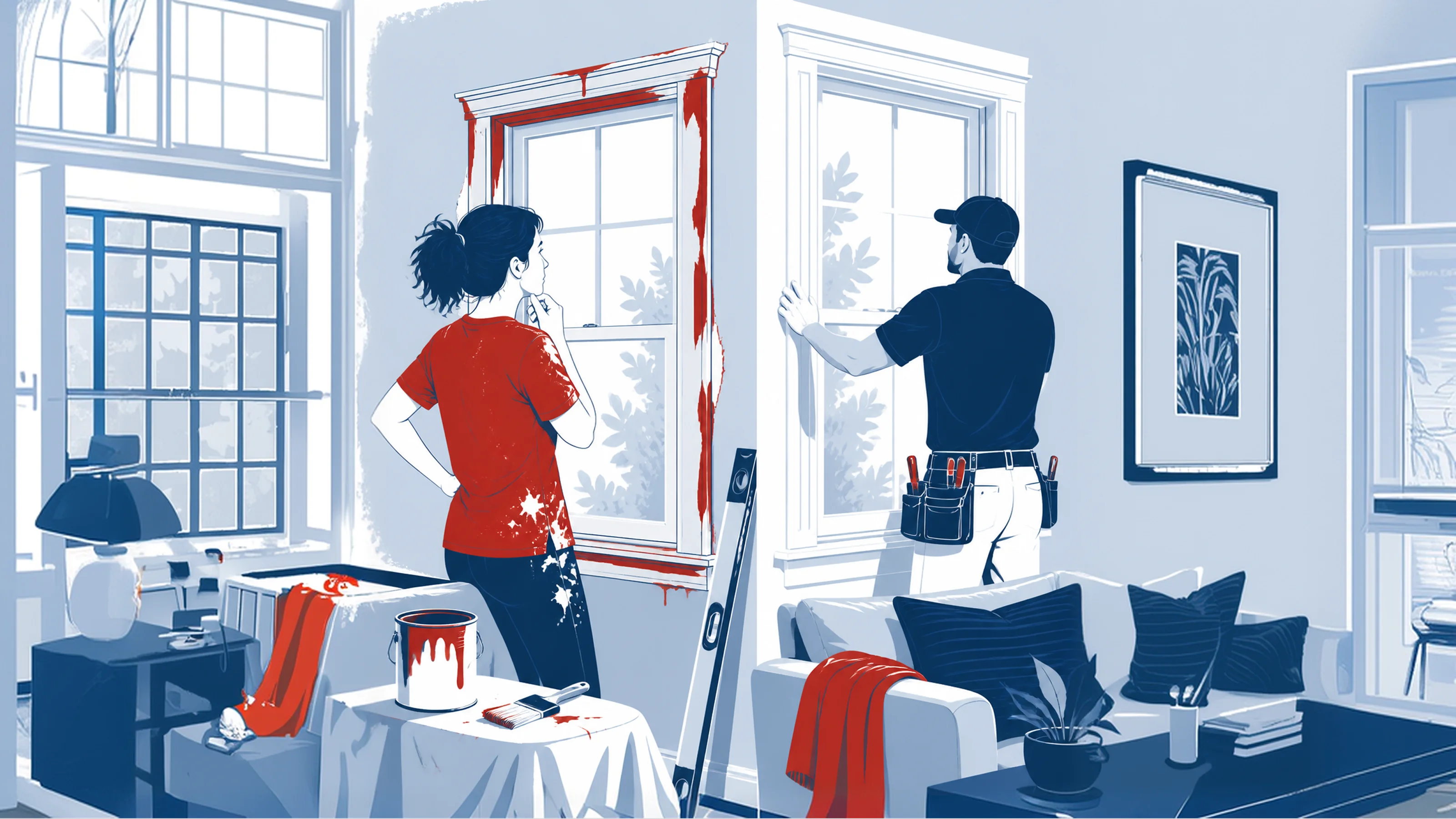
Installing and upgrading doors, windows, and trim can help keep out drafts andlower energy bills, but homeowners often question whether they can do it themselvesor if they should hire a professional. The answer can depend on local codes, theintricacies of flashing, and how accurately a water-repellent barrier must beinstalled.
Projects that involve structural changes, fire-safe doors, or egress requirementswill need a permit and inspection. For those jobs, calling a licensed contractor orcertified inspector is necessary. More basic tasks, such as installing new screenson windows or trim, or replacing wood, are something an experienced handyman coulddo. The challenge comes in knowing when a sophisticated touch is needed forflashing, weather-stripping, or a new lock system.
For example, nail-fin windows can be installed over exterior rigid foam inrenovations, but only if the flashing is done properly. According to FineHomebuilding, the gap must be flashed before the foam is put on, and the fin of thewindow must be tied into that flashing. Building Science recommends using lowexpansion spray foam, a backer rod, and a compatible sealant to maintain an airbarrier. Over-expanding foam can warp the frame, increasing the infiltration rateby 5–10%, so keeping the beads thin and controlled is important.
Replacing trim and caulking around windows may seem minor but is vital for afinished look and moisture management. Trim costs can vary from $5 to $12 perlinear foot based on the material and finish. Green Building Advisor highlightsthat the caulk used on the foam-to-wood interface must remain flexible and stick toboth surfaces. A door-in-a-door can be built into a window opening for bettersealing; the inside frame should be framed within the foam cavity and sealed withspray foam and tape.
Both storm doors and screen doors add an extra layer of protection, but they alsorequire careful consideration of flashing and sealing. On average, the cost ofinstalling a storm door is between $250 and $600, including hardware and sealing. Ascreen door costs between $200 and $400, though prices may rise with custom sizingor extra flashing. Correctly integrating flashing and weather-stripping preventswater from getting in and keeps the door sealed.
Sliding door rollers require only basic tools to adjust, but the end result can besmooth operation and a better seal. A set of screwdrivers and a level can be usedto raise or lower the rollers to realign the door with the track. With the rollersin the right place, the door glides freely and the weather strip stays in contactwith the threshold, cutting down on drafts. This kind of adjustment is often aquick task that a homeowner can handle, saving money and extending the door's life.
Installing new locks, handles, and hardware can usually be done by a DIYer, butegress or fire-rated doors may require a locksmith. American door handles come indifferent finishes and locking mechanisms, and selecting the right one will dependon the door's material and required security. A replacement door can be installedby a homeowner if the frame is already there, but the door must meet local fireratings and egress standards. If there's any doubt, a licensed professional shouldbe consulted to ensure compliance and avoid fines.
In conclusion, many door and window upgrades can be done by a capable homeowner,especially if it involves installing new screens, trim, or adjusting rollers.However, jobs that disrupt the building envelope, require flashing, or includecode-critical components are best left to licensed professionals. By followingguidance from Fine Homebuilding, Building Science, and Green Building Advisor,homeowners can achieve a tight, energy-efficient envelope without overspending.
.svg)
.svg)

.svg)
