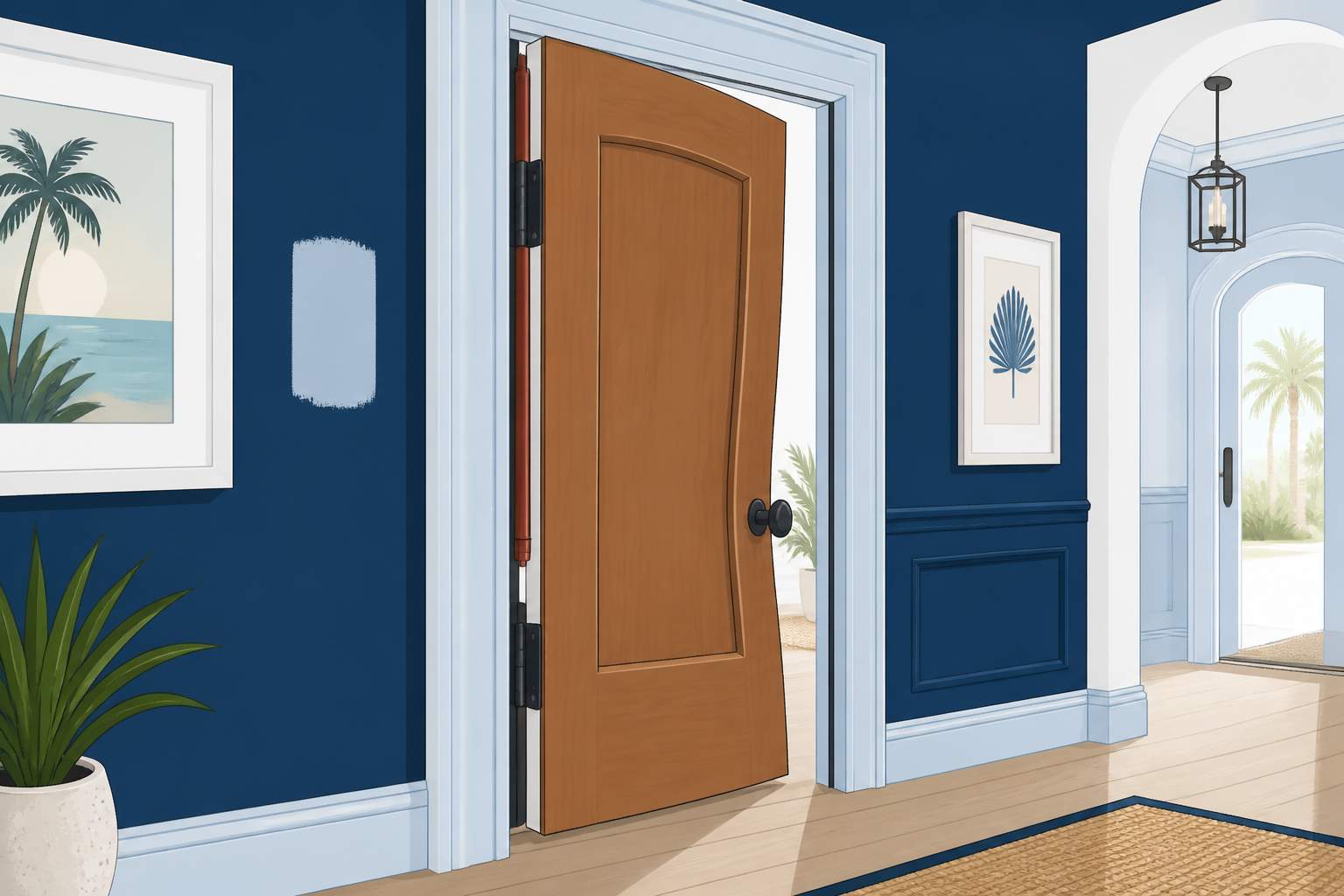
A warped interior door can be a frustrating issue for homeowners in Florida. The state’s humid climate causes wood to expand and contract with moisture, leading to doors that no longer hang straight. Common problems include a deadbolt that scrapes against the frame, doors that stick, or visible gaps that let in drafts.
To begin addressing the issue, you'd need to assess the severity of the warp. A twist of less than two degrees can usually be fixed with some adjustments, but a more significant warp may necessitate a door replacement.
In Florida, uneven moisture absorption is the main culprit behind warping. Energy Swing Windows explains that wood absorbs water from one side while the other side remains dry, leading to bowing or twisting. Sunlight can exacerbate this, as it heats one side more than the other, causing different rates of expansion. Additionally, doors that are too heavy for the hinges can sag, creating a bow that progressively worsens with each use.
Start by checking the hinges. Make sure all screws are tightened and secured into the studs of the door frame. For doors taller than 80 inches, adding a third hinge near the bottom can help distribute the weight. Using longer screws that reach the stud will also provide a stronger hold. Once the hinges are secured, look at the strike plate. Loosening the screws and adjusting the plate by a few millimeters can relieve pressure on the deadbolt.
Next, shim the frame. Using thin wood shims or a strip of cardboard, slide it behind the hinge leaf on the side moving away from the jamb. Close the door and observe the gaps, adding or removing shims until the door sits flush. This simple technique can correct a slight bow.
If the door still has a visible gap at the top, the warp may be more severe. In that case, controlled moisture treatment can help. Spray a fine mist of water on the concave side of the door, then clamp it across its width with a bar or pipe clamp. Maintain a stable relative humidity of 45-55% as the wood dries. After 24 to 48 hours, remove the clamps and recheck the door. If it’s flat, apply a thin coat of water-based varnish or clear lacquer to all surfaces to seal the wood and minimize future moisture changes.
Replacement may be the best option if the door remains more than two degrees out of alignment, or if the frame is cracked or warped. Choose a new door with a moisture-resistant core, such as foam-filled or engineered-core, which will hold its shape better in humidity. When installing, use proper window door installation methods, ensure the jamb is square, and consider installing a storm door with a kit for extra protection. Don’t forget to replace any damaged hardware, such as the door lock and handle, and install a new latch plate if necessary.
If you’re unsure about the severity or need for structural changes, it’s best to contact a licensed professional. They can assess the situation and recommend either realigning the jamb, repositioning the hinges, or replacing the door entirely. They can also assist with necessary storm door installation.
.svg)
.svg)

.svg)
