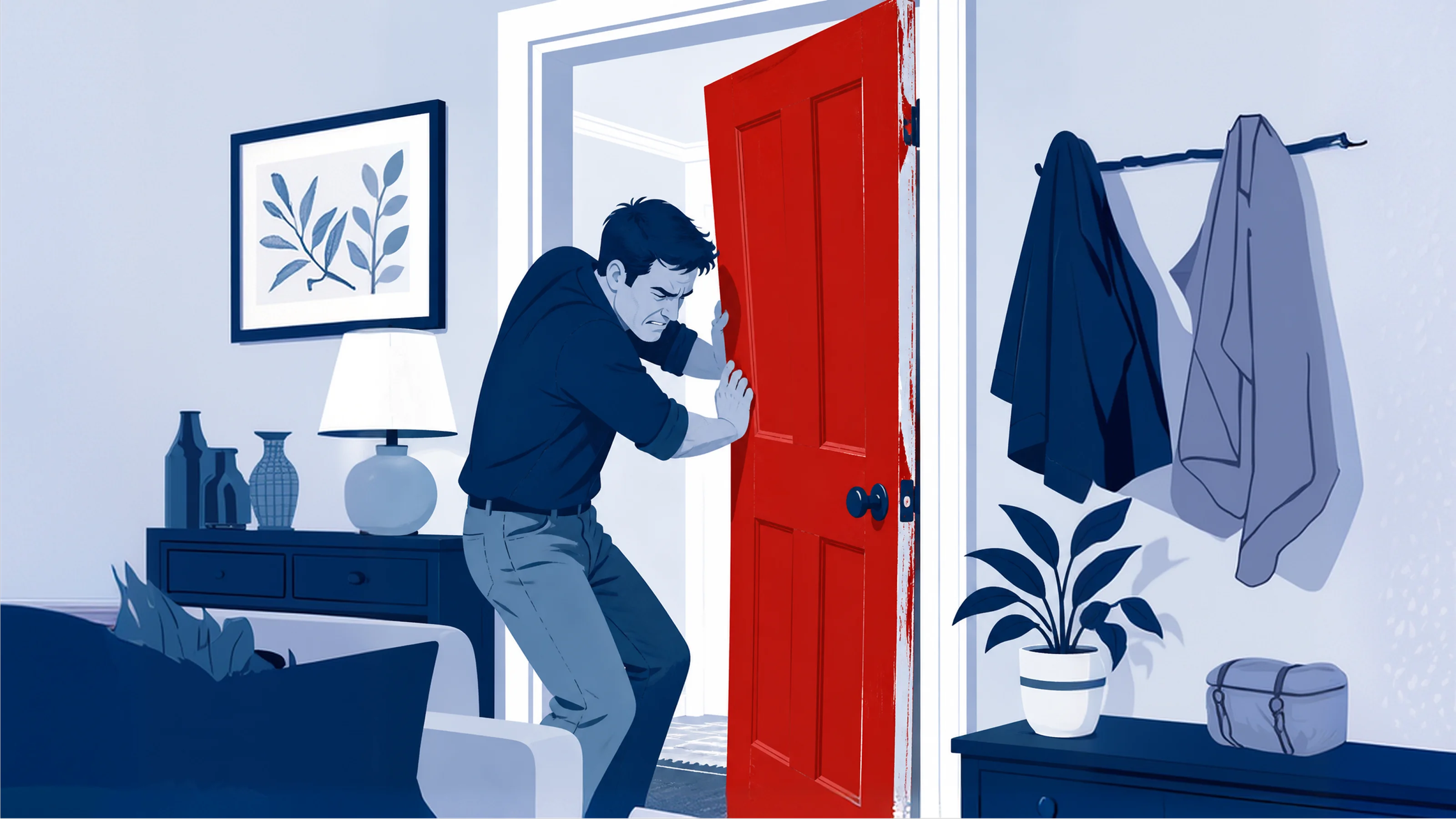
A sticking or popping interior door is a common issue for many homeowners. Althoughit may seem odd, paint blocking is a frequent cause of this problem. The paint cancreate a bond between the door and its jamb if it has not fully cured, whichprevents easy movement. Other potential causes include hinge misalignment, warpedframes, or improperly aligned hardware. Identifying the underlying issue is crucialto resolving the annoyance, whether through a quick DIY fix or professional help.
Paint blocking occurs when a fresh paint layer on the door meets a freshly paintedjamb before the coating has cured. To reduce paint transfer, Benjamin Mooresuggests using a latex paint with good blocking resistance and allowing enough timefor the paint to dry. Lightly sanding existing glossy surfaces can also help. Insituations where paint buildup decreases the door's clearance, or if the door orframe is warped, sanding or planing may be necessary before using a dry-filmlubricant such as a spray dry lube. This lubricant can significantly reducefriction between painted surfaces.
Hinge alignment and hardware angles also contribute to door movement. A door thatis slightly misaligned or a handle that is not perfectly square can createunnecessary drag. Installing handles at the correct height—usually 36 to 40 inchesfrom the ground—and ensuring the backset matches the door's specifications keepsthe latch aligned with the strike plate, preventing the lever from rubbing againstthe jamb. After replacing a storm-door window or installing a new exterior door,checking the backset and tightening screws are essential. If the door continues tostick, a strip of painter’s tape can be temporarily used to mute noise until apermanent solution is found.
The best approach is a tiered repair plan. Start by letting the paint cure fully,as per the manufacturer's instructions. Next, check the hinge alignment and tightenloose hardware. Third, find the contact area by marking it with chalk or carbonpaper, and sand away a small amount of material if needed. Finally, apply adry-film lubricant; this often restores smooth operation without further materialremoval. If the door remains stuck, consider repainting with lower blocking latexpaint or planing the edge, but be cautious not to over-remove material.
If the DIY approach does not work, it's time to consult a handyman or licensedcontractor. They can handle structural adjustments, egress doors required by code,or the installation of storm doors with flashing and screens. Additionally,replacing a sliding door with a window in a high-rise building may need a licensedpro to ensure compliance with building codes and proper sealing. A contractor canalso assist with more complicated doors and windows installation, such as patchholes in a door, installing new door handles and pulls, or fixing screen doors.
A sticking door repair provides an opportunity to enhance your home’s appearance.After resolving the sticking, consider upgrading to a new storm door andinstallation package, or installing a fresh exterior door that fits your home’sstyle. Improving window trim installation or replacing windows in Washington DC canalso complement the new door. Adding new door handles and pulls can further enhancethe entryway's look.
In many cases, sticking painted doors may be caused by paint blocking, hingemisalignment, or improper hardware angles. A dry-film lubricant can usually solve the problem without sanding, although sanding may be needed after significant paintbuildup. Homeowners can quickly tighten hinges, check angles, and mark contactzones as DIY solutions to restore movement. For structural, code-critical, or moreextensive installations, a licensed professional is best. By following thisroadmap, you can eliminate the annoyance of a sticking door and, if desired,upgrade doors, windows, and surrounding trim.
.svg)
.svg)

.svg)
