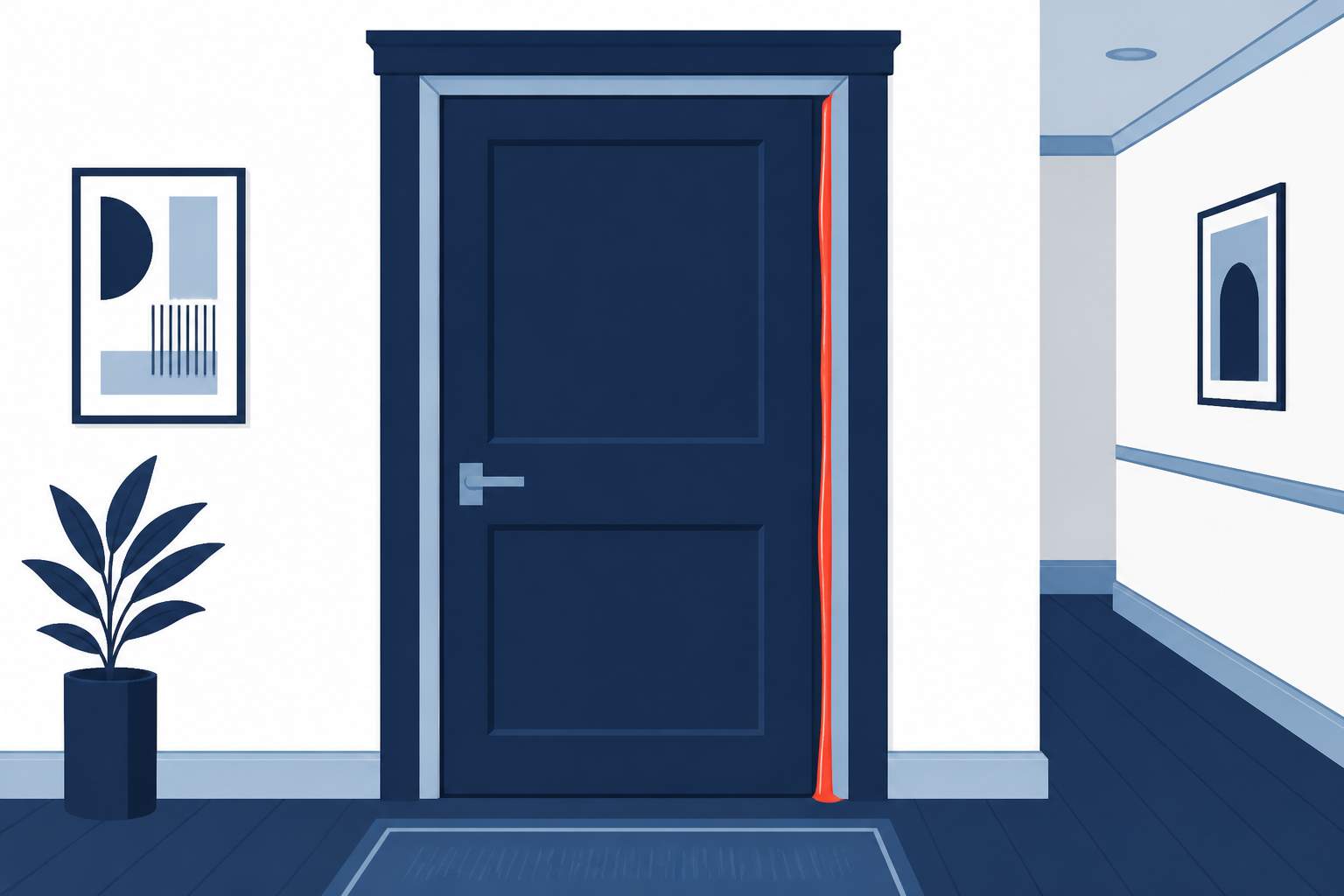
Gaps between a door jamb and wall can lead to annoying drafts. A fluid-applied weather barrier—known as liquid flashing—can seal those gaps. This product works as a fiber-reinforced caulk. It cures to form a continuous membrane and is made for easy hand application. For a typical interior door, one tube—costing around $25—should cover the entire jamb. The overall process is less than an hour, which is quicker than traditional tape flashing that can take two to four hours.
To begin, prep the jamb. You should remove old caulk, trim away any loose wood, and wipe the surface clean with a damp cloth. Light sanding helps the liquid flashing adhere better. If the door has a sill or lower jamb, create a 5 percent slope away from the door to direct any moisture that reaches the jamb toward the floor. Famly Handyman mentions that proper sloping is important for effective drainage.
After the prep, apply the liquid flashing. You can use either a plastic trowel or a brush. Starting at the top, spread the product down the jamb, smoothing the bead as you go. It fills gaps up to half an inch and can accommodate minor irregularities in the frame. The liquid is self-leveling, which means it will flow into any crevice without the need for overlapping tape layers that may create weak points. Once the flashing has cured—often in 30 minutes—you can install or reinstall the door the same day.
After applying the flashing, add a low-expansion spray foam along the jamb. The foam expands modestly to fill remaining voids, then tightens for a snug seal. Lastly, caulk along the interior side of the jamb. This provides an airtight barrier against air and moisture, completing the seal. Altogether, liquid flashing, foam, and caulk create a strong seal against water and drafts.
This approach has clear advantages. Liquid flashing offers better water resistance than tape because it forms a single membrane without seams. It also reduces air leaks, which can lower heating and cooling costs over time. Although the material is more expensive, less time and lower risk of errors during installation can balance costs, particularly in humid Florida areas where moisture management is essential. Huber Engineered Woods says the fluid-applied system can be painted or troweled directly onto the substrate, making transitions easier.
For most homeowners, this method is safe. It does not involve structural changes, electrical work, or the removal of exterior doors. The only tools you need are a trowel or brush, a spray foam gun, and a caulk gun. If you find that the door frame is rotted, wall sheathing is damaged, or there is significant water intrusion beyond the door opening, it's best to contact a licensed contractor. Such issues may involve damage that a DIY solution can't fix.
With these steps, homeowners in Florida can quickly and effectively seal gaps around an interior door without having to hire a general contractor.
.svg)
.svg)

.svg)
