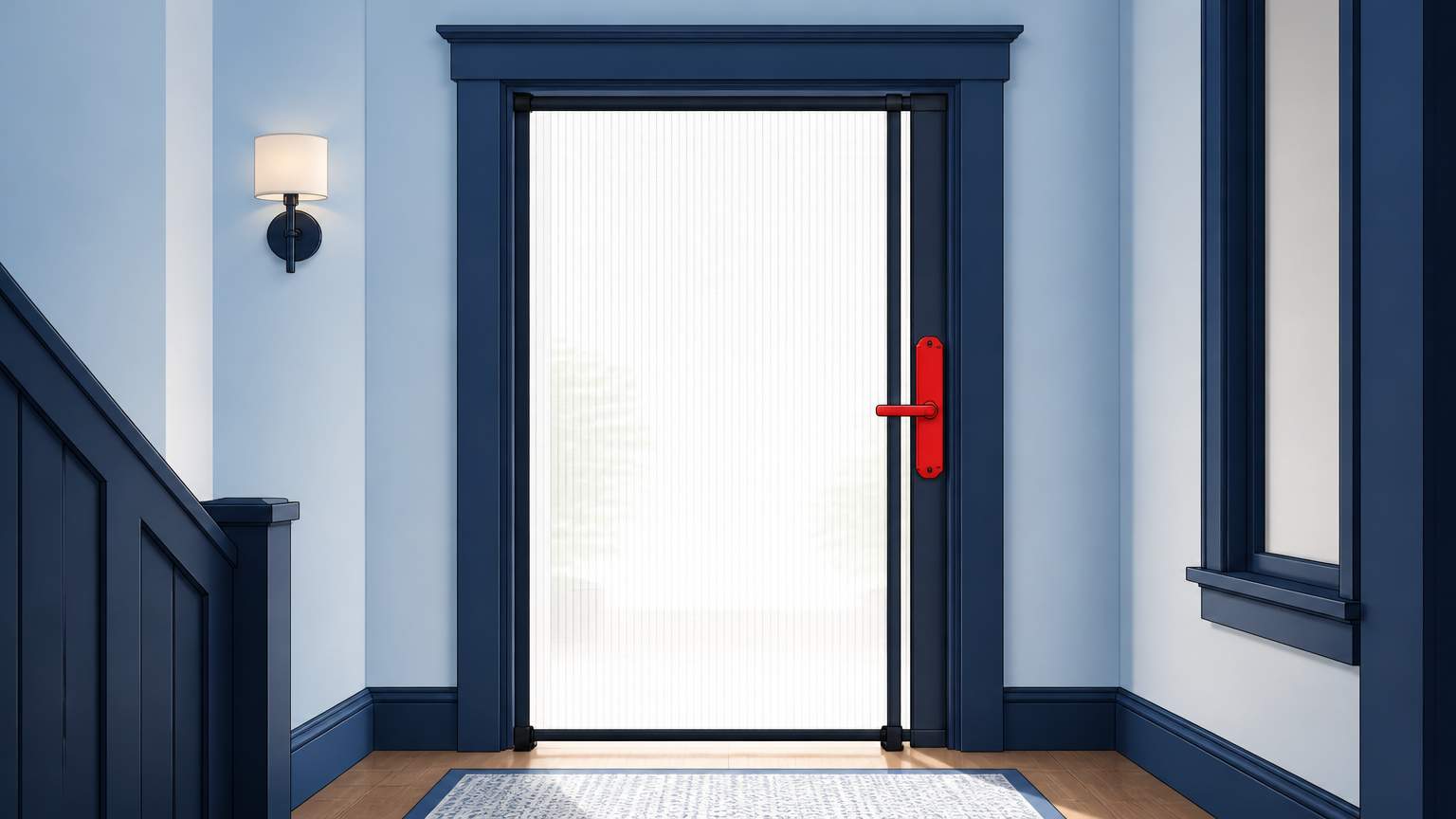
If a retractable screen door becomes difficult to open, it's often due to an old latch or a worn handle. Living in Florida's humid climate can speed up rust on metal components, which can lead to a door that doesn’t open properly. But there's good news: replacing the latch and handle is a simple task that most DIYers can tackle. Doing this helps ensure that the door remains functional and less susceptible to moisture damage.
You will need a few basic tools: a screwdriver, a drill with a Phillips bit, a level, a pair of tweezers or pliers, a new latch set that fits the door frame, and a small saw or utility knife (if necessary). You may also want a tube of caulking and a caulk gun for weatherproofing, and some weatherstripping for sealing the door frame. If the door has a motorized opening system, you may need to coordinate the latch replacement with the motor control panel. However, most manual doors make this an easy swap.
Start by taking out the old latch. Remove it by unscrewing the mounting screws and gently pulling the assembly from the frame. Clean the latch area with a mild detergent to get rid of any dirt or rust. Measure the new latch and make sure it matches the size of the old one. If the new one is slightly bigger, you can trim the trim or use a shim to keep it level. Secure the new latch by tightening the screws, but be careful not to tighten them too much, as that can crack the frame. After that, you should apply caulking around it and along the frame's edge to block any moisture. Finish up by putting a fresh piece of weatherstripping along the door's bottom to help keep the inside dry.
In Florida’s climate, vinyl frames can warp and aluminum ones can rust, so it is a good idea to choose a latch that is rated for high humidity. Many options now come in stainless steel or are coated to resist moisture. Whenever you install a new screen door or storm door, you can use the caulking method to seal around windows to avoid drafts, and think about using a 45-degree angle nail or drywall anchor when you want to install a floating shelf or hang pictures on drywall.
There are a few risks. The most frequent mistake is misaligning the latch, which can cause the door to stick. If it’s not centered, the screen may not retract completely, leading to a drafty door fix. Using the wrong size of weatherstripping can also leave gaps that may let moisture in. If the door is motorized and the latch is not replaced properly, it can interfere with the motor’s sensor, causing the motor to overheat or the screen to jam. This is when a licensed installer is your best option.
If you have a motorized screen or aren’t sure about the alignment, you might want to contact a licensed contractor. For most manual retractable screen doors, however, a homeowner can change the latch and handle using the tools and steps described above.
.svg)
.svg)

.svg)
