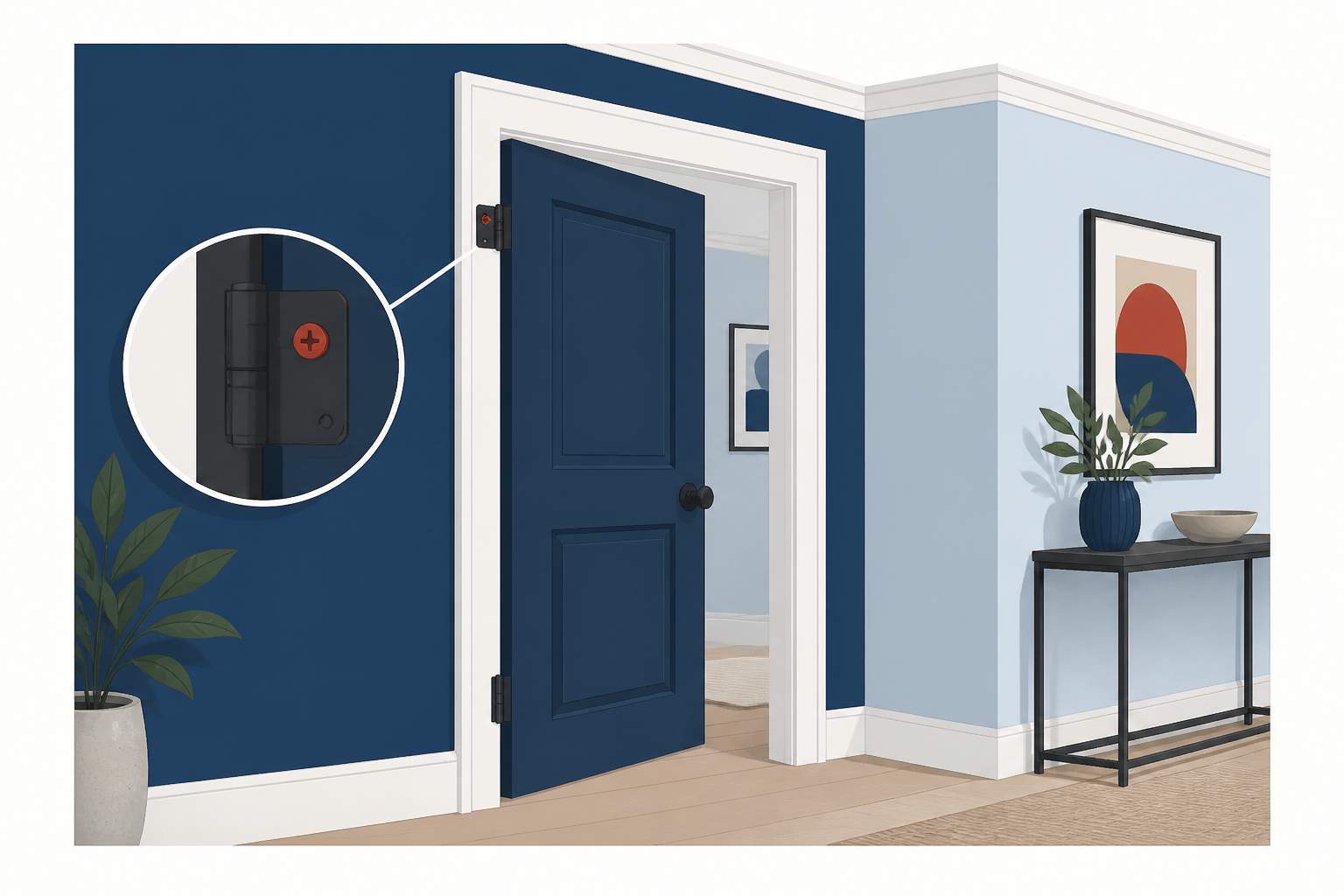
Doors that swing crookedly or make noise while opening and closing often need their hinges adjusted. For homes in areas like Florida with high humidity, this can be a common issue. Adjusting the hinges can take a lot of time if you have to work with wood shims. Fortunately, there's a faster method: adjustable screws.
Misalignment creates visible gaps, cold corners, and uneven wear on the frame. It's often caused by a change in the framing that makes the jamb uneven. Humidity causes wood to swell and change shape, which can push the hinges out of position. If the jamb is not plumb, the door won't be square, leading to weather stripping not sealing properly and air moisture getting in.
In the past, it was common to fix this by inserting wood shims between the jamb and studs, then trimming the shims. This method is slow and doesn't work when the trim is already installed, which many Florida homes have. So, fine-tuning the jamb's position generally became very time-consuming.
Fine Homebuilding describes a much quicker way to install the screws. Using plumbing screws as adjustable standoffs saves time and frustration. They are driven into the framing, just above the hinge locations. An exact-width board is lowered into place against the jamb, touching the lower screws. Those screws become a level reference point for the installer who then adjusts the upper screws until perfectly in line with the lower ones.
This method has three advantages:
Speed – Wooden shim cutting and trimming isn't needed. Drainage – The screw holes will allow any moisture to drain out. Trim-friendly – The work is done from the inside, letting the trim stay in place.
When the jamb is in place, the door is put on and checked for fit against all three sides. The installer makes any adjustments, then drives screws through the jamb at the screw spaces and into the casing. Trim plugs hide screw heads. Finally, the installer checks that the door fits well, opens, and closes without issue.
Once the door is in place, the installer seals the joint between the house-wrap and the back-flashing with flexible flashing, applies high-grade polyurethane caulk along the sill, and places a rolled-up flexible piece of material to limit moisture and air getting in at the base. These steps help protect the frame and improve energy efficiency.
While adjustable screws are mostly used for hinges, many homeowners require additional work. A door sweep install, for example, can help block the lower end of the door. Painting door trim will restore its original appearance. If the door continues to squeak after this, repairing the door knob or getting a new door latch could help. For sliding screens, repairing screen door rollers is necessary. Should the door's threshold warp, repair window screen or fix a window can help.
Should a project involve more than a single door, such as replacing a window door, installing exterior window trim, or patching a drywall hole, homeowners should consider if it's safe for a handyman to do it. Any job that needs structural changes, new walls, or electrical work is best left to a licensed contractor.
Using adjustable screws to fix the hinges on interior doors lets Florida homeowners get a better result quickly. Drafts will lessen, doors will last longer, and time is saved—all while staying safely within the handyman's limit.
.svg)
.svg)

.svg)
