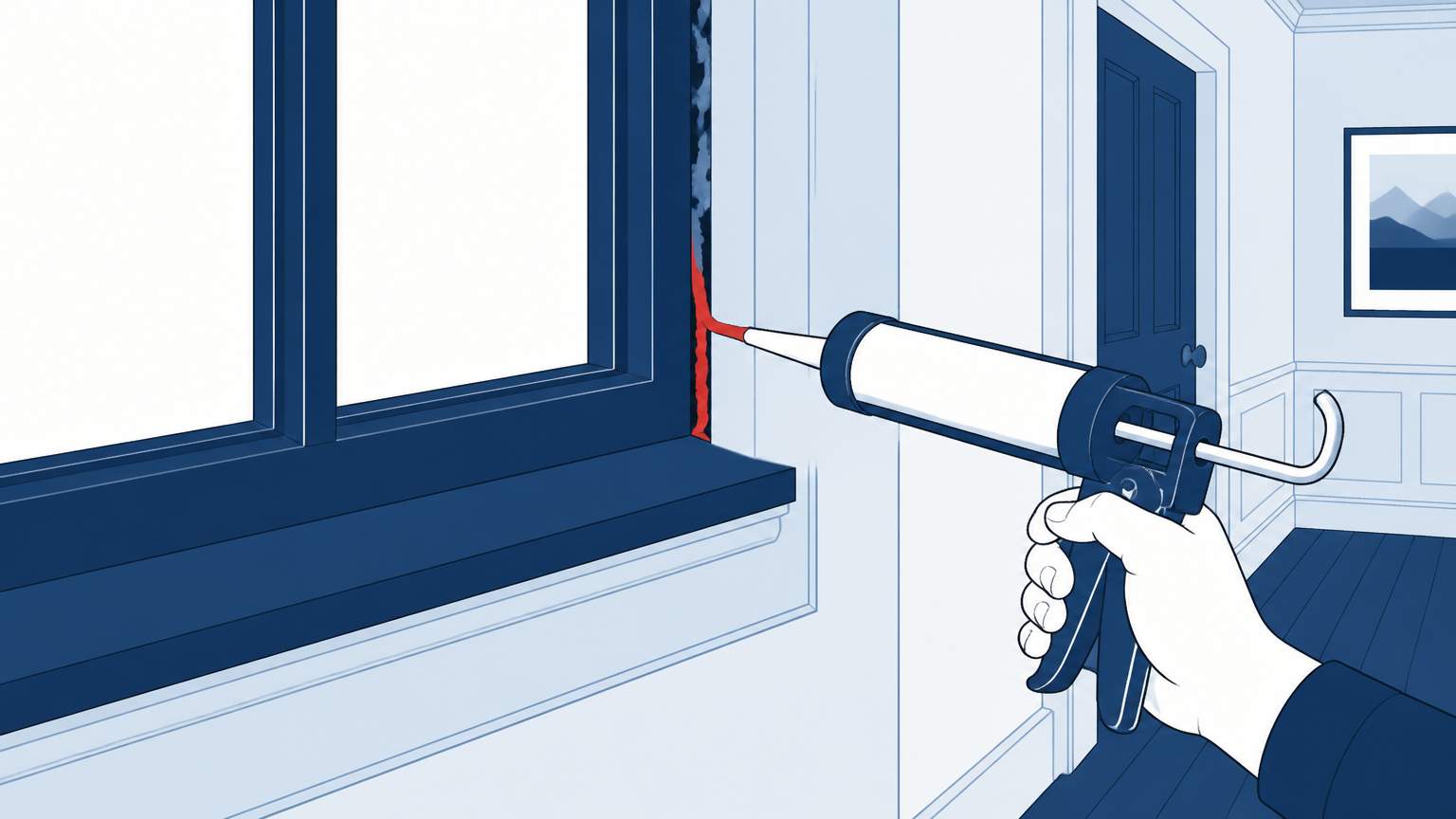
In Florida's humid environment, drafty windows are common. Sealing gaps with fresh caulk maintains indoor temperatures and blocks moisture, which promotes mold and dust mites. Refreshing any dilapidated caulking can potentially reduce air infiltration by 30 percent, improving indoor air quality and reducing energy bills. The material and labor costs are low, making this a task a homeowner can take on readily.
For this job, you'll want an outdoor-grade silicone or acrylic caulk, a caulk gun, a utility knife, painter’s tape, a clean rag, and a small brush or putty knife. Wearing gloves will protect against caulk solvent landing in skin cracks. Scrape out the old caulk with a utility knife without cutting into the trim. Clean the space with soap and water. Wait for it to dry completely.
Then, apply painter's tape alongside the seam to make your bead straight. Load the caulk gun, cut the tip at a 45° angle, and dispense a smooth bead along the edge. Smooth the bead as desired with a damp finger or brush, wiping away any surplus. Allow the caulking the specified time to set, usually a 24 hours, and then remove the tape.
Cool air conditions for a large part of the day leads air conditioning units to work hard in the summertime. Window drafts are responsible for rising warm air being let out and cool air being drawn in. Studies suggest that sealing windows can reduce cooling energy use by 5-15 percent. In a typical 1,500-square-foot home, that translates to a typical savings of several hundred dollars in electric costs. The lessening of humidity means a reduced likelihood of mold in area.
If your trim has warping or moisture damage, or if there’s mold larger than can be treated with a basic DIY approach, this might not be just window caulking being a quick and easy fix for home windows. In those situations, you will require a contractor who can check for damage to frames and repair them, as well as make sure the fixes meet building codes.
Replacing caulking on windows is a simple project whose rewards are worth the time in effort and in cash. Sealing those drafts has secondary benefits of providing better air quality and also reducing energy consumption.
.svg)
.svg)

.svg)
